1. Utangulizi
This user manual provides comprehensive instructions for the installation, operation, and maintenance of your HDWR videoCAR-L300 Dash Cam. Please read this manual thoroughly before using the device to ensure proper functionality and to maximize its lifespan. Keep this manual for future reference.
2. Bidhaa Imeishaview
The HDWR videoCAR-L300 is a versatile dash camera designed to enhance your driving safety and record your journeys. It functions as both a front and rear recording device, integrated into a rearview mirror with a touchscreen display.
Sifa Muhimu:
- Rekodi Kamili ya Video ya HD: The front camera records in Full HD (1920x1080) resolution, providing clear and detailed video footage.
- Rear Camera Functionality: The rear camera offers VGA (640x480) recording resolution and can also serve as a reverse camera for parking assistance.
- Integrated 4.7-inch Touchscreen Display: The wide mirror, approximately 30 cm, features a built-in 4.7-inch touchscreen for easy operation and increased rear visibility.
- Lenzi ya Pembe Pana ya Shahada 120: The front camera's lens offers a 120-degree viewing angle, capturing a broad area in front of your vehicle.
- Uendeshaji Otomatiki: Features include automatic camera start and stop, motion detection, and adjustable sensitivity.
- G-Sensor for Impact Detection: Automatically protects recordings from being overwritten in the event of sudden braking or a collision.
- Usaidizi wa Kadi ya MicroSD: Supports microSD memory cards up to 32GB for storing recorded video and audio files.

Kielelezo 2.1: Mbele view of the HDWR videoCAR-L300 Dash Cam, showing the mirror display with a car image.
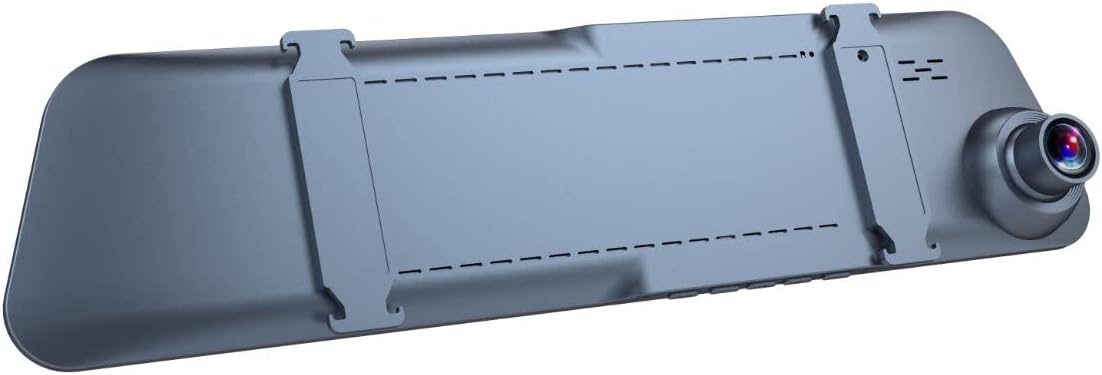
Kielelezo cha 2.2: Nyuma view of the HDWR videoCAR-L300 Dash Cam, highlighting the mounting clips for installation.
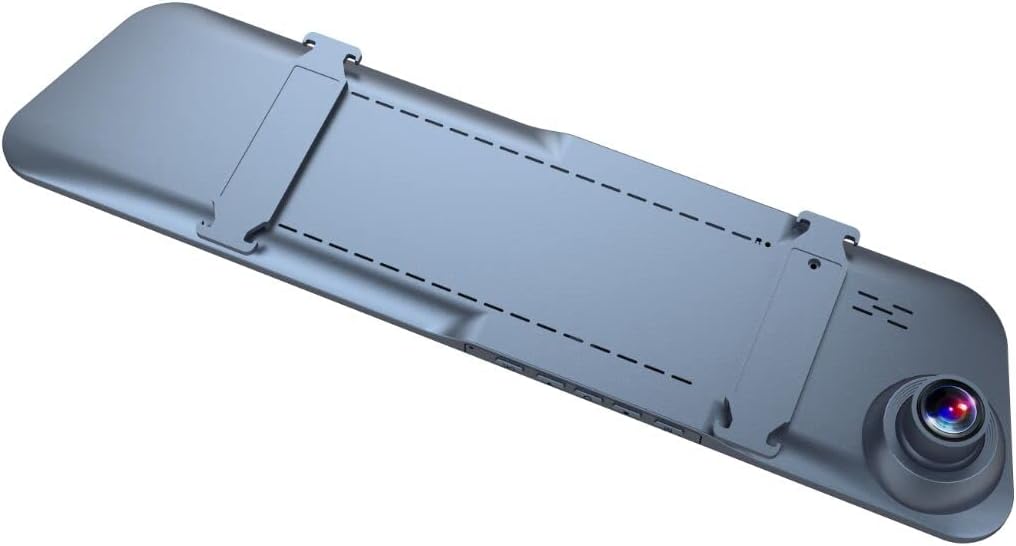
Mchoro 2.3: Sehemu ya nyuma yenye pembe view of the HDWR videoCAR-L300 Dash Cam, showing the camera lens and mounting clips.

Kielelezo cha 2.4: Kilipuka view illustrating the various perspectives of the HDWR videoCAR-L300 Dash Cam.
3. Kuweka na Kuweka
3.1 Ni nini kwenye Sanduku
Kabla ya kuanza usakinishaji, tafadhali hakikisha vipengele vyote vipo:
- HDWR videoCAR-L300 Dash Cam Unit
- Kebo ya Kuchaji
- Chombo cha Ufungaji
- Mwongozo wa Mtumiaji (hati hii)
3.2 Installation Steps (Windshield Mount)
The videoCAR-L300 is designed for windshield mounting, typically over your existing rearview kioo.
- Tayarisha Kifaa: Gently unbox the dash cam and ensure the protective film is removed from the screen and lens.
- Kupachika: Securely attach the dash cam to your vehicle's rearview mirror using the integrated clips. Ensure it is firmly in place and does not obstruct your view.
- Unganisha Nguvu: Use the provided charging cable to connect the dash cam to your vehicle's 12V power outlet (cigarette lighter socket). Route the cable neatly to avoid interference with driving.
- Install Rear Camera (Optional): If using the rear camera, connect it to the main unit and route its cable to the rear of the vehicle. Mount the rear camera in a suitable location, typically near the license plate or inside the rear window, ensuring a clear view.
- Weka Kadi ya MicroSD: Insert a compatible microSD card (up to 32GB, not included) into the designated slot on the dash cam. Ensure it is inserted correctly until it clicks into place.
- Kuwasha kwa Awali: Start your vehicle. The dash cam should automatically power on. If not, press the power button.
- Rekebisha Pembe: Adjust the angle of the front camera lens to ensure it captures the road ahead clearly. Use the live view on the touchscreen display for precise alignment.

Figure 3.1: The dash cam installed on the vehicle's rearview mirror, showing its integration into the car's interior.
4. Maagizo ya Uendeshaji
4.1 Washa/Zima
- Uendeshaji Otomatiki: The device is designed to automatically power on and begin recording when your vehicle's ignition is turned on, and power is supplied. It will automatically power off when the ignition is turned off.
- Uendeshaji wa Mwongozo: To manually power on or off, press and hold the power button located on the device.
4.2 Urambazaji kwenye skrini ya kugusa
The 4.7-inch touchscreen display allows for intuitive navigation through menus and settings.
- Kiolesura kuu: Maonyesho ya moja kwa moja view from the front and/or rear cameras.
- Kufikia Menyu: Tap the screen to reveal menu icons. Swipe left/right or up/down to navigate through options.
- Kuchagua Chaguzi: Gonga aikoni au chaguo ili kuichagua.

Figure 4.1: The dash cam's screen showing a live road view, indicating active recording.
4.3 Njia za Kurekodi
- Kurekodi Kitanzi: The dash cam continuously records video in segments (e.g., 1, 3, or 5 minutes). When the memory card is full, the oldest unlocked files huandikwa upya kiotomatiki.
- Kihisi cha G (Kurekodi Dharura): In the event of sudden braking or a collision, the built-in G-Sensor detects the impact and automatically locks the current video segment, preventing it from being overwritten by loop recording.
- Utambuzi wa Mwendo: When enabled, the camera will automatically start recording if it detects movement in front of the vehicle while parked. This feature requires continuous power supply.
4.4 Uchezaji
Kufanya upyaview foo iliyorekodiwatage:
- From the main screen, tap to access the menu.
- Select the "Playback" or "Gallery" option.
- Browse through the recorded video and audio files. Imefungwa files (from G-Sensor events) will typically be in a separate folder.
- Gonga a file to play it back on the screen.
4.5 Settings Adjustment
Access the settings menu to customize various parameters:
- Azimio la Video: Adjust recording quality (e.g., Full HD, VGA).
- Muda wa Kurekodi Kitanzi: Set the length of video segments.
- Unyeti wa G-Sensor: Adjust the sensitivity of the impact detection.
- Utambuzi wa Mwendo: Washa au zima kipengele hiki.
- Tarehe/Saa Stamp: Ensure the correct date and time are set for accurate recording timestamps.
- Kurekodi Sauti: Enable or disable microphone recording.
- Kiokoa Skrini: Set the display to turn off after a period of inactivity to avoid distraction while driving.
5. Matengenezo
Regular maintenance ensures optimal performance and longevity of your dash cam.
- Kusafisha Lensi: Use a soft, lint-free cloth to gently wipe the camera lenses. Avoid abrasive materials or harsh chemicals that could scratch the lens.
- Kusafisha skrini: Wipe the touchscreen display with a soft, dry cloth. For stubborn smudges, slightly dampsw kitambaa na maji.
- MicroSD Card Maintenance: Format the microSD card regularly (e.g., once a month) within the camera's settings to prevent data corruption and ensure smooth recording. Back up any important footage kabla ya umbizo.
- Halijoto: Avoid exposing the device to extreme temperatures (very hot or very cold) for extended periods, as this can affect battery life and component performance.
- Uwekaji salama: Periodically check that the dash cam is securely mounted to prevent vibrations from affecting video quality or causing the device to fall.
6. Utatuzi wa shida
If you encounter issues with your HDWR videoCAR-L300, refer to the following common problems and solutions:
| Tatizo | Sababu inayowezekana | Suluhisho |
|---|---|---|
| Kifaa hakiwashi. | No power supply; loose cable connection; faulty power adapter. | Check the charging cable connection to the device and the vehicle's power outlet. Ensure the vehicle's ignition is on. Try a different power outlet or cable if available. |
| Kurekodi hukoma au kugandisha. | Full or corrupted microSD card; slow microSD card; G-Sensor triggered too often. | Format the microSD card (back up data first). Use a high-speed (Class 10 or U1/U3) microSD card. Adjust G-Sensor sensitivity in settings. |
| Video footage haina ukungu au haijulikani wazi. | Dirty lens; protective film still on lens; improper camera angle. | Clean the camera lens with a soft cloth. Remove any protective film. Adjust the camera angle to ensure a clear view ya barabara. |
| Skrini haifanyi kazi. | Hitilafu ya programu ya muda. | Perform a soft reset by pressing and holding the power button until the device restarts. If unresponsive, disconnect power and reconnect. |
| Kamera ya nyuma haifanyi kazi. | Loose connection; faulty cable or camera. | Check the connection of the rear camera cable to the main unit. Ensure the cable is not damaged. |
If the problem persists after trying these solutions, please contact HDWR customer support for further assistance.
7. Vipimo
| Kipengele | Maelezo |
|---|---|
| Chapa | HDWR |
| Jina la Mfano | videoCAR |
| Nambari ya Mfano wa Kipengee | L300 |
| Vipimo vya Bidhaa | 3.5D x 29.7W x 7H cm; 180 grams |
| Ukubwa wa skrini | inchi 4.7 |
| Video Resolution (Front) | HD Kamili (1920x1080p) |
| Video Resolution (Rear) | VGA (640x480) |
| ViewAngle | 120 Digrii |
| Aina ya Kumbukumbu ya Flash | microSD (hadi 32GB) |
| Teknolojia ya Uunganisho | AUX |
| Vipengele Maalum | Motion Sensor, G-Sensor |
| Njia ya Kudhibiti | Gusa |
| Aina ya Kuweka | Dirisha la Windshield |
| Betri Imejumuishwa | Hapana |
| Vifaa Sambamba | Simu mahiri |
8. Udhamini na Msaada
For warranty information and technical support, please refer to the official HDWR website or contact their customer service directly. Details regarding warranty periods and service procedures are typically provided with your purchase documentation or on the manufacturer's webtovuti.
Kwa usaidizi zaidi, tafadhali tembelea: www.hdwr.eu


