Utangulizi
Thank you for choosing the Tchibo Cafissimo Capsule Machine. This manual provides essential information for the safe and efficient use of your appliance. Please read it thoroughly before first use and keep it for future reference.
This machine is designed to prepare various coffee beverages, including espresso, crema, and filter coffee, as well as tea, using Tchibo Cafissimo capsules.
Maagizo Muhimu ya Usalama
- Soma maagizo yote kabla ya kutumia kifaa.
- Usitumbukize kifaa, kamba, au kuziba kwenye maji au vimiminiko vingine.
- Uangalizi wa karibu ni muhimu wakati kifaa chochote kinatumiwa na watoto au karibu nao.
- Chomoa kwenye sehemu ya kutolea umeme wakati haitumiki na kabla ya kusafisha. Ruhusu ipoe kabla ya kuvaa au kuondoa sehemu, na kabla ya kusafisha kifaa.
- Usitumie kifaa chochote kilicho na waya au plagi iliyoharibika au baada ya hitilafu ya kifaa, au kuharibiwa kwa namna yoyote.
- Utumiaji wa viambatisho vya nyongeza ambavyo havijapendekezwa na mtengenezaji wa kifaa vinaweza kusababisha moto, mshtuko wa umeme au majeraha kwa watu.
- Usitumie nje.
- Usiruhusu kamba kuning'inia ukingo wa meza au kaunta, au kugusa sehemu zenye moto.
- Usiweke au karibu na gesi moto au kichomea umeme, au kwenye oveni yenye joto.
- Ambatisha plagi kwenye kifaa kwanza, kisha chomeka kebo kwenye plagi ya ukutani. Ili kukata muunganisho, zima kidhibiti chochote ili "kuzima", kisha uondoe plagi kwenye plagi ya ukutani.
- Usitumie kifaa kwa matumizi mengine isipokuwa yaliyokusudiwa.
- Scalding may occur if the capsule holder is opened during the brewing cycle.
Bidhaa Imeishaview
Familiarize yourself with the components of your Tchibo Cafissimo capsule machine.

Picha ya 1: Mbele view of the Tchibo Cafissimo capsule machine. It shows the capsule insertion area, the coffee spout, and a glass cup placed on the drip tray, filled with coffee. The machine is white with black accents.
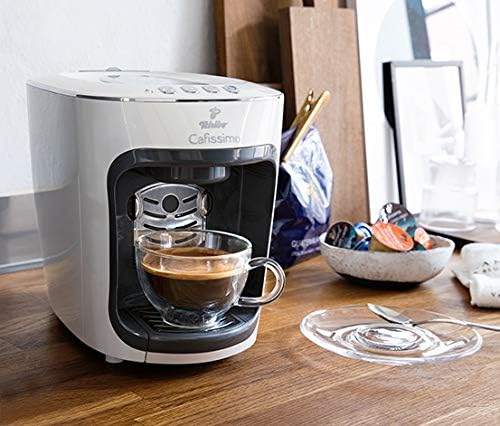
Picha ya 2: The Tchibo Cafissimo capsule machine positioned on a wooden kitchen counter. A glass cup with coffee is under the spout, and various coffee capsules are visible in a bowl nearby. This image provides a context of the machine in use.
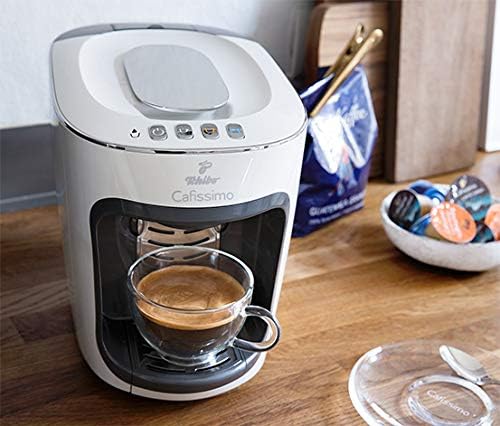
Picha ya 3: Mwingine view of the Tchibo Cafissimo capsule machine on a kitchen counter, similar to Image 2, but from a slightly different angle. It highlights the machine's compact design and its integration into a kitchen environment, with a cup of coffee ready.

Picha ya 4: Upande view of the Tchibo Cafissimo capsule machine, showcasing its sleek, elongated design. A glass cup with coffee is visible under the spout, emphasizing the machine's profile and footprint.
Sanidi
- Kufungua: Carefully remove all packaging materials. Ensure all parts are present.
- Uwekaji: Weka mashine kwenye uso thabiti na tambarare, mbali na vyanzo vya joto na maji.
- Hifadhi ya Maji: Fill the water reservoir (capacity: 650 ml) with fresh, cold drinking water. Ensure it is properly seated.
- Muunganisho wa Nishati: Chomeka kamba ya umeme kwenye sehemu inayofaa ya ukuta.
- Suuza ya Awali: Before first use, perform an initial rinse cycle without a capsule to clean the internal system. Refer to the "Operating" section for brewing instructions.
- Kuongeza joto: The machine has a warm-up time of approximately 40 seconds. The indicator lights will signal when it's ready for use.
Maagizo ya Uendeshaji
Brewing Coffee or Tea
- Jaza Tangi la Maji: Hakikisha hifadhi ya maji imejaa maji safi.
- Washa: Turn on the machine. Wait for the indicator lights to show it's ready (approx. 40 seconds warm-up).
- Ingiza Kidonge: Open the capsule holder. Place one Tchibo Cafissimo capsule into the holder. The magnetic function ensures easy and secure placement. Close the capsule holder firmly.
- Kombe la Nafasi: Position your cup or espresso glass on the magnetic drip tray. The tray is designed to accommodate various cup sizes.
- Chagua Kinywaji: Choose your desired beverage by pressing one of the three brew buttons:
- Button 1: Espresso
- Button 2: Crema / Filter Coffee
- Button 3: Tea
- Adjust Water Volume (Programmable): The water volume for each beverage can be individually programmed to control the aroma and intensity of your coffee or tea. Refer to the machine's specific programming instructions (usually involves holding down the brew button until desired volume is reached, then releasing to save).
- Mchakato wa kutengeneza pombe: The machine will begin brewing. The process will stop automatically once the programmed volume is dispensed.
- Capsule Ejection: After brewing, open the capsule holder. The used capsule will automatically drop into the internal capsule box, which can hold up to 4 capsules.
- Njia ya Kusubiri: The machine will enter standby mode after 9 minutes of inactivity to save energy.
Matengenezo na Usafishaji
Kusafisha Kila Siku
- Drip Tray and Capsule Box: Regularly empty and clean the drip tray and the used capsule box. These components are typically removable and can be rinsed with warm water and mild detergent.
- Hifadhi ya Maji: Clean the water reservoir periodically with warm water and mild detergent. Rinse thoroughly.
- Nje: Futa sehemu ya nje ya mashine kwa laini, damp kitambaa. Usitumie visafishaji vya abrasive au vimumunyisho.
Kuondoa
The machine features a descaling reminder and an integrated descaling function. Regular descaling is crucial for maintaining optimal performance and extending the lifespan of your machine, especially in areas with hard water.
- Kikumbusho cha Kupunguza: The machine will indicate when descaling is required (refer to your machine's specific light indicators for this).
- Maandalizi: Empty the water reservoir and fill it with a descaling solution suitable for coffee machines, following the descaler manufacturer's instructions. Place a large container under the coffee spout.
- Anza Kupunguza: Initiate the integrated descaling program. This usually involves a specific button combination or holding down a button for a few seconds. Consult your machine's quick start guide or the full manual for the exact procedure.
- Mzunguko wa Suuza: After the descaling cycle is complete, rinse the water reservoir thoroughly and fill it with fresh water. Run at least two full water cycles through the machine to remove any descaling solution residue.
Kutatua matatizo
This section addresses common issues you might encounter with your Tchibo Cafissimo capsule machine. For more complex problems, please contact customer support.
- Mashine haiwaki:
- Hakikisha waya wa umeme umechomekwa kwa usalama kwenye plagi ya umeme inayofanya kazi.
- Angalia kama swichi kuu ya umeme (ikiwa ipo) iko katika nafasi ya 'WASHA'.
- No coffee dispensed / Slow flow:
- Check if the water reservoir is filled and correctly seated.
- Ensure a capsule is properly inserted and the capsule holder is closed.
- The machine may need descaling. Follow the descaling instructions in the Maintenance section.
- Clean the coffee spout for any blockages.
- Leaking water:
- Ensure the water reservoir is correctly positioned and not overfilled.
- Check the drip tray for proper placement.
- If leaking persists, contact customer support.
- Coffee not hot enough:
- Pre-heat your cup by rinsing it with hot water.
- Ensure the machine has completed its warm-up cycle.
- Descaling may improve heating efficiency.
Vipimo
| Chapa | Tchibo |
| Nambari ya Mfano | 370892 |
| Vipimo vya Bidhaa | 18 x 29.8 x 22.3 cm |
| Uzito | 4.67 kg |
| Uwezo wa Tangi la Maji | Mililita 650 |
| Nyenzo | Plastiki |
| Vipengele Maalum | Programmable, Timer (Standby) |
| Matumizi Maalum | Espresso |
| Ingizo la Kiolesura cha Binadamu | Vifungo |
| ASIN | B07VB36G33 |
| GTIN | 04006083708921 |
| Tarehe ya Kwanza Inapatikana | Februari 12, 2020 |
Udhamini na Msaada
Specific warranty information and detailed customer support contact details are not provided in the available product data. Please refer to the documentation included with your purchase or visit the official Tchibo website for warranty terms and customer service contact information.


