
1. Utangulizi
This manual provides essential information for the safe and efficient operation of your Anern 4200W Hybrid Solar Inverter. Please read this manual thoroughly before installation and use. Keep it for future reference.
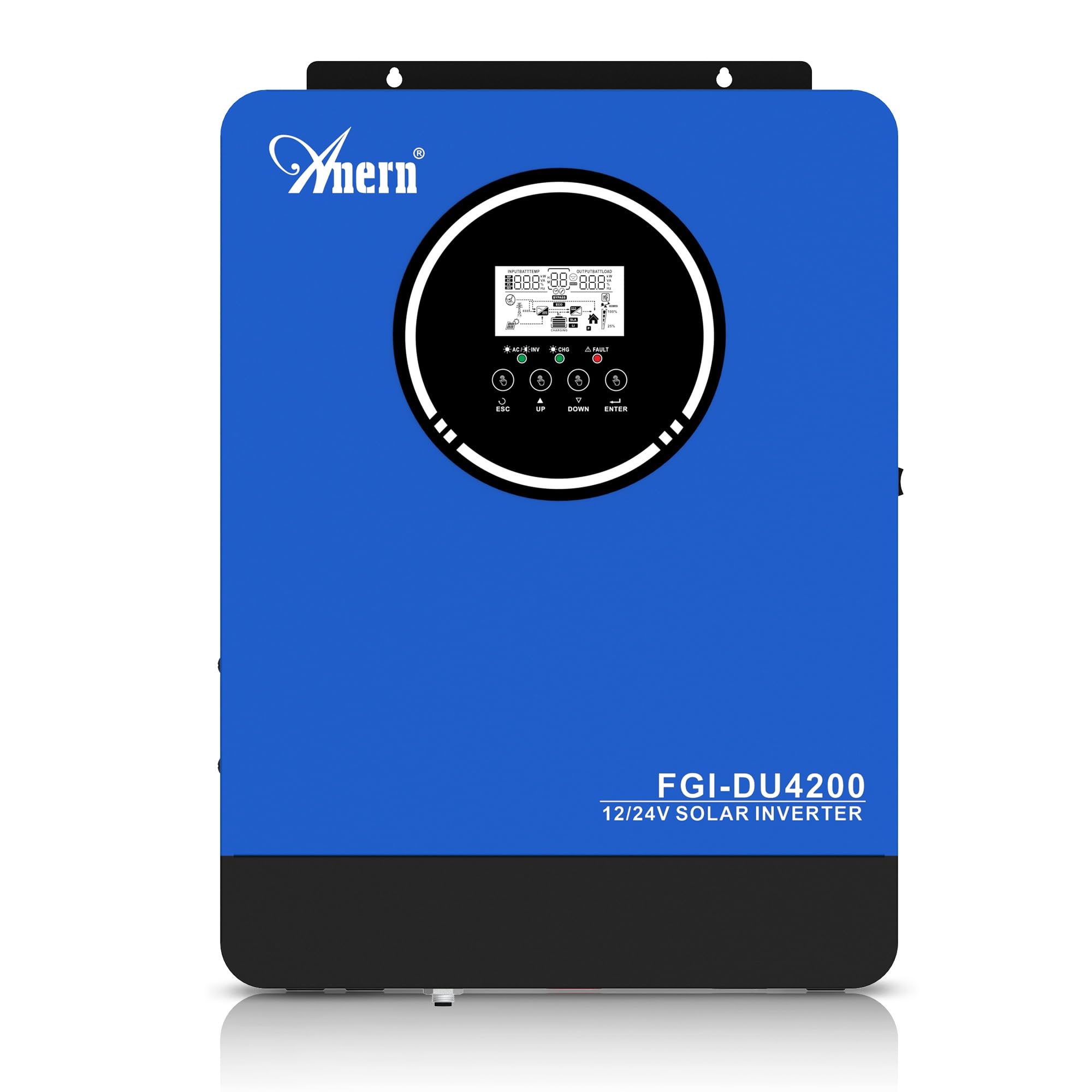
Figure 1: Anern 4200W Hybrid Solar Inverter. This image displays the main unit of the inverter, highlighting its key specifications such as 100A AC charging current, 4200W rated output power, and 500 VDC maximum PV array voltage.
2. Maagizo ya Usalama
Daima zingatia tahadhari zifuatazo za usalama ili kupunguza hatari ya mshtuko wa umeme, moto au majeraha:
- Ufungaji lazima ufanyike na wafanyikazi waliohitimu.
- Ensure all wiring is correctly connected and equipped with appropriate protective switches.
- Usitenganishe kibadilishaji umeme. Hakuna sehemu zinazoweza kutumika ndani.
- Epuka kuweka inverter kwenye mvua, theluji, dawa ya kunyunyizia, au vimiminika vyovyote.
- Hakikisha uingizaji hewa wa kutosha kuzunguka inverter ili kuzuia joto kupita kiasi.
- Tenganisha vyanzo vyote vya umeme (PV, betri, huduma) kabla ya kufanya matengenezo au nyaya zozote.
3. Bidhaa Imeishaview
The Anern 4200W Hybrid Solar Inverter is designed to convert DC power from solar panels and batteries into AC power for household use. It features an integrated 100A MPPT solar charge controller and supports both 12V and 24V battery systems with automatic detection.
Sifa Muhimu:
- 4200W Pure Sine Wave Output: Provides stable and clean power for sensitive electronics.
- 100A MPPT Solar Charge Controller: Huongeza uvunaji wa umeme kutoka kwa paneli za jua.
- 12V/24V Battery Auto-Detection: Automatically adjusts output based on connected battery voltage.
- BMS Interface: Supports communication with lithium batteries for enhanced monitoring and protection.
- Real-time LED Display: Shows system status, operating data, and error codes.
- Configurable Charging & Output Modes: Offers flexibility for various application needs.
- Optional WiFi/GPRS Monitoring: Remote monitoring capability (module sold separately).

Figure 2: Inverter Display and Controls. This image illustrates the inverter's LCD display, function buttons for configuration, and the optional WiFi module for remote monitoring.
4. Kuweka na Kuweka
4.1 Mchoro wa Wiring
Refer to the electrical schematic for proper system wiring. Ensure all connections are secure and correctly polarized.

Figure 3: Electrical Schematic. This diagram shows the complete wiring for a solar inverter system, including solar panels, combiner box, DC/AC breakers, inverter, utility grid connection, and loads.
4.2 Muunganisho wa Betri
The inverter supports 12V and 24V battery configurations. It automatically detects the battery voltage and adjusts its output accordingly (2300W for 12V, 4200W for 24V). For 24V systems, connect two 12V batteries in series. For 12V systems, connect batteries in parallel if increasing uwezo.

Figure 4: Battery Connection Options. This image illustrates how to connect batteries for 12V (parallel connection for 2300W output) and 24V (series connection for 4200W output) systems.
The inverter also supports lithium batteries and includes a BMS (Battery Management System) interface for monitoring and protection. Ensure the BMS is properly connected if using lithium batteries.

Figure 5: Communication Interfaces. This image highlights the dual communication interfaces for BMS (Battery Management System) and optional WiFi module, enabling remote monitoring and battery communication.
4.3 Startup and Shutdown Sequence
Mlolongo wa Kuanzisha:
- Unganisha betri.
- Washa inverter.
- Activate the protective switches for PV, Utility, and Loads.
Mlolongo wa Kuzima:
- Deactivate the protective switches for Loads, Utility, and PV.
- Zima inverter.
- Tenganisha betri.
Important Note: Inductive loads (e.g., motors, refrigerators) may require up to 3 times their rated power for startup. Ensure the inverter's capacity is sufficient to handle these surge loads. Exceeding the inverter's surge capacity can cause damage.
5. Uendeshaji
5.1 LCD Display and Settings
The inverter features an LED display that provides real-time system data and operating status. Use the function buttons below the display to navigate menus and configure settings. Settings include battery charging current, AC/solar charging priority, and charging current priority.
Njia 5.2 za Kuchaji
The inverter offers four configurable charging modes:
- Kipaumbele cha Jua: Solar power is prioritized for charging.
- Sola Pekee: Only solar power is used for charging.
- Kipaumbele cha Huduma: Utility grid power is prioritized for charging.
- Solar + Utility Hybrid: Combines solar and utility power for charging.
5.3 Njia za Kutoa
Three output modes are available to adapt to various application needs:
- Solar Priority (SUB): Solar power is prioritized for loads.
- Utility Priority (USB): Utility grid power is prioritized for loads.
- SBU: Solar, Battery, Utility priority.

Figure 6: Charging and Output Modes. This diagram visually explains the four available charging modes (Solar Charge, Utility Priority, Solar Priority, Hybrid Charge) and three load output modes (PV Priority, Utility Priority, SBU Priority).
5.4 Ufuatiliaji wa mbali
The inverter supports remote monitoring via an optional WiFi/GPRS module (sold separately). This allows users to monitor system performance and status from a distance.
6. Matengenezo
Matengenezo ya mara kwa mara huhakikisha utendaji bora na uimara wa inverter yako:
- Keep the inverter clean and free from dust. Use a dry cloth for cleaning.
- Hakikisha fursa za uingizaji hewa hazijazuiwa.
- Mara kwa mara angalia miunganisho yote ya nyaya kwa ajili ya kukazwa na dalili za kutu.
- Monitor the battery status, especially if using lithium batteries with the BMS interface, to prevent overcharge or deep discharge.
- Inspect solar panels for dirt or damage that could reduce efficiency.
7. Utatuzi wa shida
The LED display will show error codes if issues arise. Refer to the inverter's display for specific error codes to diagnose and resolve problems. Common issues and their potential solutions include:
- Hakuna Pato la Nguvu: Check battery connections, DC/AC breakers, and inverter power switch.
- Batri ya chini Voltage: Ensure batteries are adequately charged. Check charging sources (solar, utility).
- Onyo la Kupakia: Reduce the connected load. Inductive loads may cause temporary overloads during startup.
- Kuzidisha joto: Ensure proper ventilation. Clean any dust from the inverter's vents.
- PV Input Error: Check solar panel connections and voltage. Ensure PV array voltage iko ndani ya safu maalum (55-500V DC).
For persistent issues or error codes not listed, contact customer support.
8. Maelezo ya kiufundi
| Kipengele | Vipimo |
|---|---|
| Chapa | Anern |
| Nambari ya Mfano | AN-FGI-DU 4200 |
| Nguvu ya Umeme | 4200 Watts |
| Nguvu ya Pato | 4500 Watts |
| Max. Output Power (Watts) | 4200 |
| Pato la Mawimbi | Safi ya Sine Wimbi |
| Chanzo cha Nguvu | Inaendeshwa na Sola, Inaendeshwa na Betri |
| Matumizi ya Bidhaa Yanayopendekezwa | Nyumbani |
| Vipengee vilivyojumuishwa | Mwongozo wa Maagizo |
| Kuzingatia | CE |
| Vipimo vya Bidhaa | sentimita 30 x 10 x 40; 8.86 kg |
9. Udhamini na Msaada
For warranty information and technical support, please refer to the documentation provided with your purchase or contact Anern customer service. Keep your purchase receipt as proof of purchase.


