
1. Utangulizi
This manual provides essential instructions for the safe and efficient installation, operation, and maintenance of your COTEK SP-3000-148 High Frequency Pure Sine Wave Inverter. Please read this manual thoroughly before attempting any installation or operation to ensure proper use and to prevent potential hazards. Keep this manual for future reference.
2. Maagizo ya Usalama
Daima zingatia tahadhari zifuatazo za usalama ili kupunguza hatari ya mshtuko wa umeme, moto au majeraha:
- Soma maagizo yote: Kabla ya kuendesha kibadilishaji umeme, soma maagizo yote na alama za tahadhari kwenye kibadilishaji umeme, betri, na sehemu zote zinazofaa za mwongozo huu.
- Wafanyakazi waliohitimu: All electrical work should be performed by qualified personnel familiar with battery and inverter systems and their installation.
- Uingizaji hewa: Hakikisha uingizaji hewa wa kutosha kuzunguka inverter. Usisakinishe katika sehemu isiyo na kiingilio chochote.
- Epuka unyevu: Usiweke kifaa cha kugeuza umeme kwenye mvua, theluji, dawa ya kunyunyizia, au maji yanayotiririka.
- Kutuliza sahihi: Inverter lazima iwe msingi vizuri.
- Usalama wa betri: Work in a well-ventilated area when working with batteries. Wear eye protection and protective clothing. Avoid touching eyes while working near batteries.
- Ondoa nguvu: Before performing any maintenance or cleaning, disconnect all power to the inverter.

Image: Always use appropriate safety equipment when working with electrical systems.
3. Bidhaa za Bidhaa
The COTEK SP-3000-148 inverter offers the following key features:
- Towe la wimbi safi la sine kwa vifaa vya elektroniki nyeti.
- Power ON / OFF remote control capability via green terminal.
- Input & output fully isolation for enhanced safety.
- Temperature & load controlled cooling fan for optimal performance and longevity.
- User-friendly interface for ease of operation.
- Type 1 Indoor Aluminum Enclosure for durability and protection.
4. Bidhaa Imeishaview
The COTEK SP-3000-148 is a high-frequency pure sine wave inverter designed to convert 48VDC battery power into stable 120VAC electricity, suitable for a wide range of applications.

Picha: Kwa ujumla view of the COTEK SP-3000-148 Pure Sine Wave Inverter.
4.1 Paneli ya Nyuma
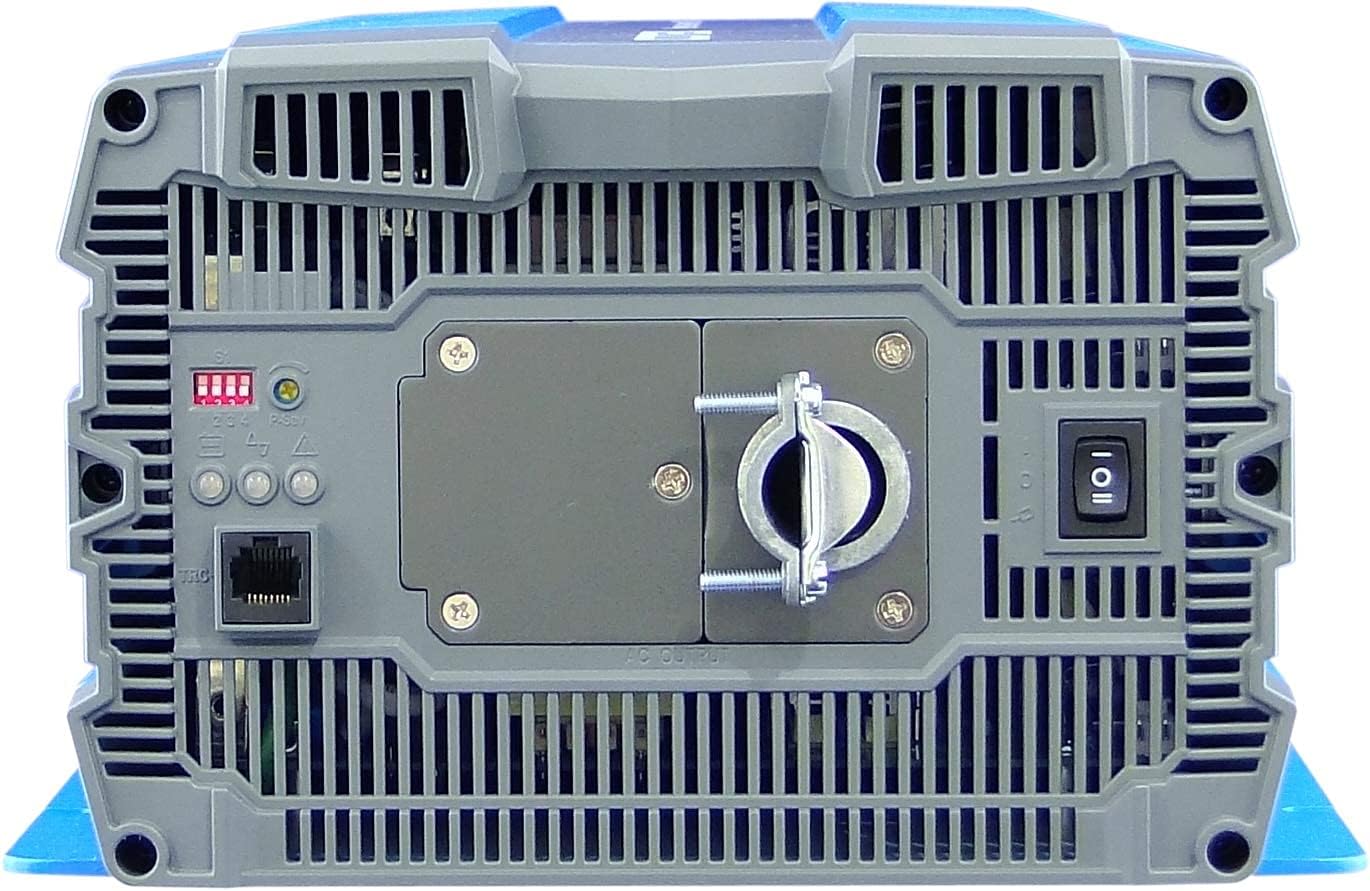
Image: Rear panel of the COTEK SP-3000-148 inverter.
- AC Output Terminal: Hardwire connection for 120VAC output.
- Kubadilisha DIP: Used for configuring output voltage na frequency.
- Remote Control Port (Green Terminal): For connecting an optional remote ON/OFF switch.
- Kubadilisha Nguvu: Swichi kuu ya kuwasha/kuzima kwa kibadilishaji umeme.
- Viashiria vya LED: Display operational status and fault conditions.
4.2 Jopo la mbele
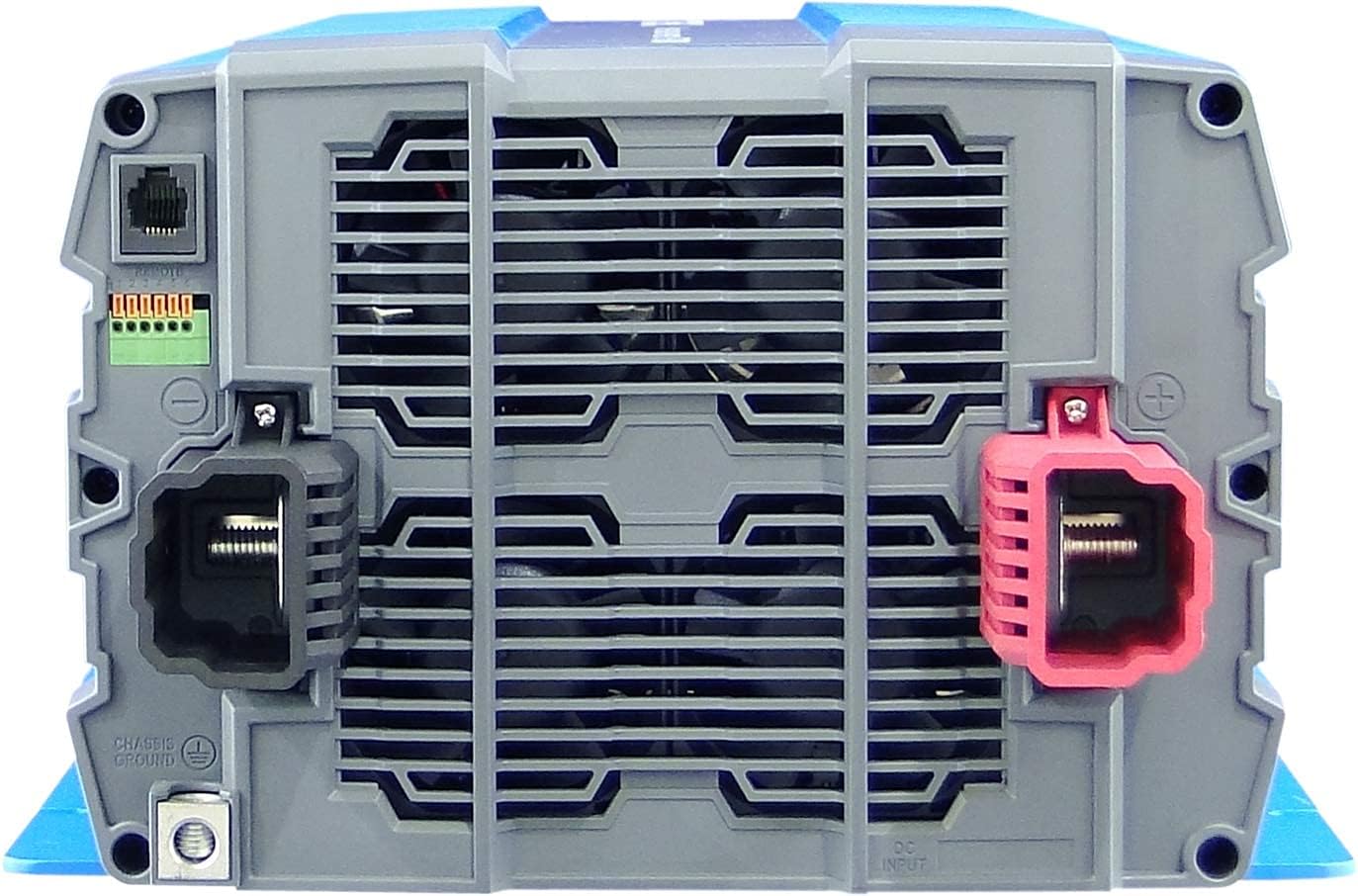
Image: Front panel of the COTEK SP-3000-148 inverter.
- Vituo vya Kuingiza vya DC: Positive (+) and Negative (-) terminals for 48VDC battery connection.
- Chassis Ground Terminal: For connecting the inverter to earth ground.
5. Ufungaji
Ufungaji sahihi ni muhimu kwa uendeshaji salama na ufanisi wa kibadilishaji kifaa chako.
5.1 Kuweka
- Mahali: Choose a dry, well-ventilated area, away from direct sunlight, heat sources, and flammable materials.
- Mwelekeo: Mount the inverter horizontally on a flat, stable surface. Ensure adequate clearance around the unit for proper airflow.
- Uwekaji salama: Use appropriate fasteners to securely mount the inverter to prevent movement or vibration.

Image: Mechanical drawings with dimensions for mounting the SP-3000 series inverter.
Wiring
Wiring zote lazima zifuate kanuni za umeme za ndani na za kitaifa.
5.2.1 DC Input Connection (48VDC)
- Connect the positive (+) terminal of the inverter to the positive terminal of your 48VDC battery bank.
- Connect the negative (-) terminal of the inverter to the negative terminal of your 48VDC battery bank.
- Use appropriately sized cables and fuses/breakers for the DC input circuit to prevent overcurrent.
5.2.2 AC Output Connection (120VAC Hardwire)
- Connect your AC loads to the hardwire AC output terminal block on the rear panel.
- Ensure proper polarity (Line, Neutral, Ground) for all AC connections.
- Consult a qualified electrician for hardwiring AC circuits.
5.2.3 Kutuliza ardhi
- Connect the chassis ground terminal on the inverter's front panel to a reliable earth ground.
- This connection is essential for safety and to minimize electrical noise.
5.2.4 Muunganisho wa Kidhibiti cha Mbali
- Connect an optional remote ON/OFF switch to the green terminal block on the rear panel.
- Refer to the remote control's specific instructions for wiring details.
6. Uendeshaji
6.1 Kuwasha / Kuzima
- Kuwasha: Ensure all connections are secure. Flip the main power switch on the rear panel to the 'ON' position. The LED indicators will illuminate to show operational status.
- Kuzima: Flip the main power switch to the 'OFF' position. If using a remote switch, ensure it is also in the 'OFF' position.
6.2 Mipangilio ya Kubadilisha DIP
The DIP switches on the rear panel allow configuration of the inverter's output voltage and frequency. Refer to the diagram below for specific settings. Always power off the inverter before changing DIP switch settings.

Image: COTEK SP-3000 series specifications and DIP switch settings.
6.2.1 Pato Voltage Uchaguzi
The inverter supports various output voltages (100V, 110V, 115V, 120V AC). Adjust DIP switches according to the desired output voltage as indicated in the specifications diagram.
6.2.2 Output Frequency Selection
The inverter can operate at 50Hz or 60Hz. Set the DIP switches to match the required frequency for your region or application.
6.2.3 Njia ya Kuokoa Nguvu
The inverter features a power saving mode (High Efficiency). Refer to the diagram for enabling or disabling this feature via DIP switches.
6.3 Viashiria vya LED
The inverter is equipped with LED indicators to display its operational status and alert you to potential issues. Consult the specifications diagram for a detailed explanation of each LED's meaning.
7. Matengenezo
Matengenezo ya mara kwa mara huhakikisha uimara na uendeshaji wa kuaminika wa inverter yako.
- Kusafisha: Safisha sehemu ya nje ya inverter mara kwa mara kwa kitambaa kikavu. Hakikisha nafasi za uingizaji hewa hazina vumbi na uchafu. Usitumie visafishaji vya kioevu.
- Viunganisho: Regularly check all DC and AC connections for tightness. Loose connections can cause overheating and poor performance.
- Ukaguzi wa Betri: Inspect your battery bank regularly for corrosion, damage, or signs of leakage.
8. Utatuzi wa shida
The SP-3000-148 inverter includes several protection features. If the inverter stops operating or indicates a fault, refer to the table below for common issues and solutions.
| Tatizo | Sababu inayowezekana | Suluhisho |
|---|---|---|
| No AC Output / Inverter Off | Main switch off, low battery voltage, overload, internal fuse. | Check power switch, charge batteries, reduce load, check DC input fuse. |
| Ingiza Chini ya Juzuutage Kengele | Betri voltage chini sana. | Chaji au ubadilishe betri. |
| Ingizo Zaidi ya Voltage Kengele | Betri voltage juu sana. | Check charging system, ensure correct battery voltage. |
| Upakiaji wa Pato | Connected load exceeds inverter's capacity. | Reduce the total load connected to the inverter. |
| Juu ya Joto | Inverter overheating due to poor ventilation or excessive load. | Ensure adequate ventilation, reduce load, allow inverter to cool. |
| Mzunguko Mfupi | Short circuit detected on AC output. | Identify and clear the short circuit on the AC output wiring or load. |
9. Vipimo
The following table details the technical specifications for the COTEK SP-3000-148 Pure Sine Wave Inverter:
| Kipengele | Vipimo |
|---|---|
| Mfano | SP-3000-148 |
| Voltage | 120VAC (Selectable via DIP switch) |
| Sheria ya AC | ±5% |
| Nguvu Iliyokadiriwa | 3000W |
| Surge Power (1 Sec) | 6000W |
| Kiwango cha Juu cha Nguvu ya Pato (Dakika 1) | 3450W |
| Pato la Mawimbi | Pure Sine Wave (THD<3% at nominal load) |
| Mzunguko | 60Hz (Selectable via DIP switch) |
| DC Voltage | 48VDC |
| Voltage Mbalimbali | 42.0 ~ 66.0VDC |
| Hakuna Mzigo wa Sasa | <1.0A @48VDC |
| Njia ya Kuokoa Nguvu | <0.4A @48VDC |
| Ufanisi (Upeo zaidi) | 92% |
| Ingiza Chini ya Juzuutage Ulinzi | 42.0 ± 0.5VDC |
| Ingiza Chini ya Juzuutage Kengele | 44.0 ± 0.5VDC |
| Ingiza Chini ya Juzuutage Kupona | 50.0 ± 0.5VDC |
| Ingizo Zaidi ya Voltage Ulinzi | 66.0 ± 1.0VDC |
| Ingizo Zaidi ya Voltage Kupona | 64.0 ± 1.0VDC |
| Upakiaji wa Pato | Shutdown output, restart to recover. |
| Pato Fupi | Shutdown output, restart to recover. |
| Juu ya Joto | Shutdown output, auto-recovery after cooling. |
| DC Input Reverse Polarity | Kwa fuse |
| Joto la Uendeshaji. | -20°C ~ +40°C |
| Halijoto ya Kuhifadhi. & Unyevu | -30°C ~ +70°C, 10 ~ 95% RH |
| Vipimo (W x H x D) | 442 x 239 x 102.5 mm (inchi 17.4 x 9.4 x 4.0) |
| Uzito | 8.2kg (pauni 18.08) |
| Udhamini | Mtengenezaji wa Miaka 2 |
10. Taarifa za Udhamini
The COTEK SP-3000-148 Pure Sine Wave Inverter comes with a Udhamini wa Miaka 2 wa Mtengenezaji. This warranty covers defects in materials and workmanship under normal use. Please retain your proof of purchase for warranty claims. For detailed warranty terms and conditions, refer to the official COTEK warranty statement or contact customer support.
11. Msaada kwa Wateja
If you encounter any issues not covered in this manual or require technical assistance, please contact COTEK customer support. Have your product model number (SP-3000-148) and purchase information ready when contacting support.